
Forklift Attachments Guide: 8 Types Every Buyer Should Know
07 Aug 2026
Choosing the right forklift attachments transforms a standard truck into a machine that handles nearly any load, from steel beams to paper rolls. The eight types every buyer should know are the side shifter, fork extensions, fork positioner, paper roll clamp, bale clamp, rotator, push-pull, and specialty tools such as carpet poles, booms, and hoppers. Buyers must also understand capacity derating, realistic prices, and carriage compatibility before spending a dollar.
The side shifter is the most widely used attachment and the first upgrade most operators request. It slides the forks laterally, typically 100-200 mm each way, so the driver aligns with a pallet without moving the truck. In narrow racking aisles this saves seconds on every cycle and reduces mast and tire wear. Confirm the fork carriage class and hydraulic plumbing when ordering, because installation differs between models.
Fork extensions slide over the existing forks to carry long or oversized loads such as timber, pipes, and sheets, at low cost and without a different truck. The trade-off is stability: extensions push the load’s center of gravity forward, rated capacity drops, and operators must never exceed the derated limit. Choose extensions with a safety lock system and match length to the load.
A fork positioner moves both forks together or apart, hydraulically, to match pallet openings without the driver leaving the cab. Paired with a side shifter, it is the classic combination for busy distribution centers. It adds carriage weight that must be included in derating calculations and requires adequate hydraulic flow.
Clamp attachments grip loads without pallets and dominate the paper, packaging, and recycling industries. A paper roll clamp cradles rolls of paper, board, or film with articulated arms, letting one operator handle rolls alone. A bale clamp handles compressed bales of cardboard, textiles, and scrap with wide, flat arms. Clamps are sized by load diameter and arm opening range, so the attachment must match the exact products you handle. Because clamps are heavy and shift the load’s center of gravity, they impose some of the largest deratings, so the truck must be specified accordingly.
A rotator turns the fork assembly and load through up to 360 degrees, essential for dumping containers or inverting loads. A push-pull works with slip sheets instead of pallets, sliding a thin sheet under the load and pulling it onto the forks, eliminating pallet weight and storage cost. Both are typically specified at the factory, as they add complex hydraulics and carriage weight, and they often pay back within months in high-volume trailer loading.
Specialty attachments solve specific jobs: a carpet pole moves rolls of carpet, textiles, and vinyl through doorways; a boom converts the forklift into a small crane for motors and steel sections; and a hopper turns the truck into a self-loading dump for scrap. Rarely needed daily, they replace expensive dedicated machines when a job demands them. Verify the attachment’s rated load, the truck’s lifting capacity, and combined stability before use.
Every attachment reduces rated capacity: subtract the attachment’s own weight and account for the forward shift of the load’s center of gravity. Derating typically runs 10% to 30% of nameplate capacity, and only the truck’s capacity plate shows the true figure. Never guess: request a derating calculation from the manufacturer and post the corrected capacity for operators. A 5-ton truck with a heavy clamp may legally handle only 3.5-4 tons; ignoring this is a leading cause of tip-overs in attachment-equipped fleets.
Attachment pricing varies widely with size, brand, and hydraulics. Published market data puts most common attachments in a broad range of roughly $550 to $14,500: side shifters and fork extensions typically land between $1,000 and $5,000, while powered clamps and rotators sit at the upper end. Factory pre-installation, hydraulic kits, and derating documentation add to the total, so a factory-specified package matched at the point of build usually costs less than retrofitting later.
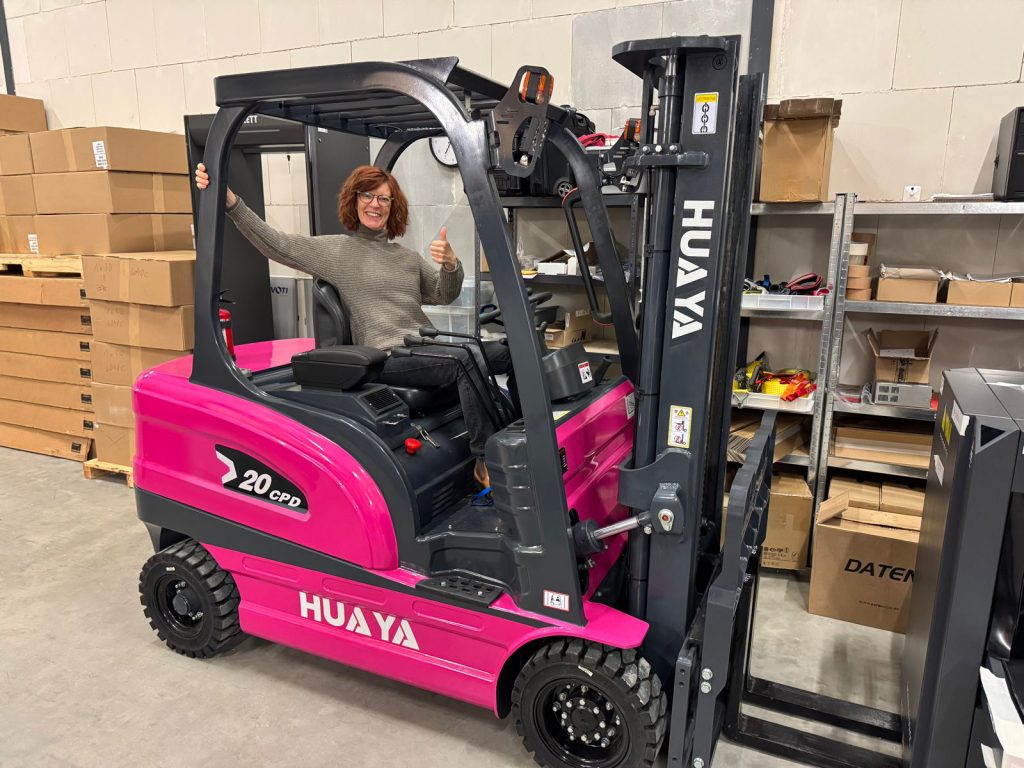
Compatibility starts with the carriage class: most counterbalance forklifts use an ITA Class II, III, or IV carriage, and the mounting plate must match the carriage width and the truck’s hydraulic capacity. A compact electric truck, such as the HUAYA electric counterbalance forklifts, suits side shifters indoors, while the 5-ton diesel forklift provides the hydraulic flow for clamps and rotators outdoors; the HUAYA terrain forklift series handles attachments in harsher conditions. If you are buying a new truck or retrofitting a fleet, our heavy-duty diesel forklift buying guide covers the whole-machine side. Tell HUAYA your load type, industry, and carriage class, and we will recommend a factory-configured package with the correct derating calculation. Contact our team to start.


Hot Products
Forklift Mast Guide: 2-Stage vs 3-Stage vs Full Free Lift
Rough Terrain Forklifts: When Does Your Site Need One?
Cold Storage Forklifts: A Complete Selection Guide
New vs Used Forklifts: A Smart Buying Decision Guide


